Quick answer
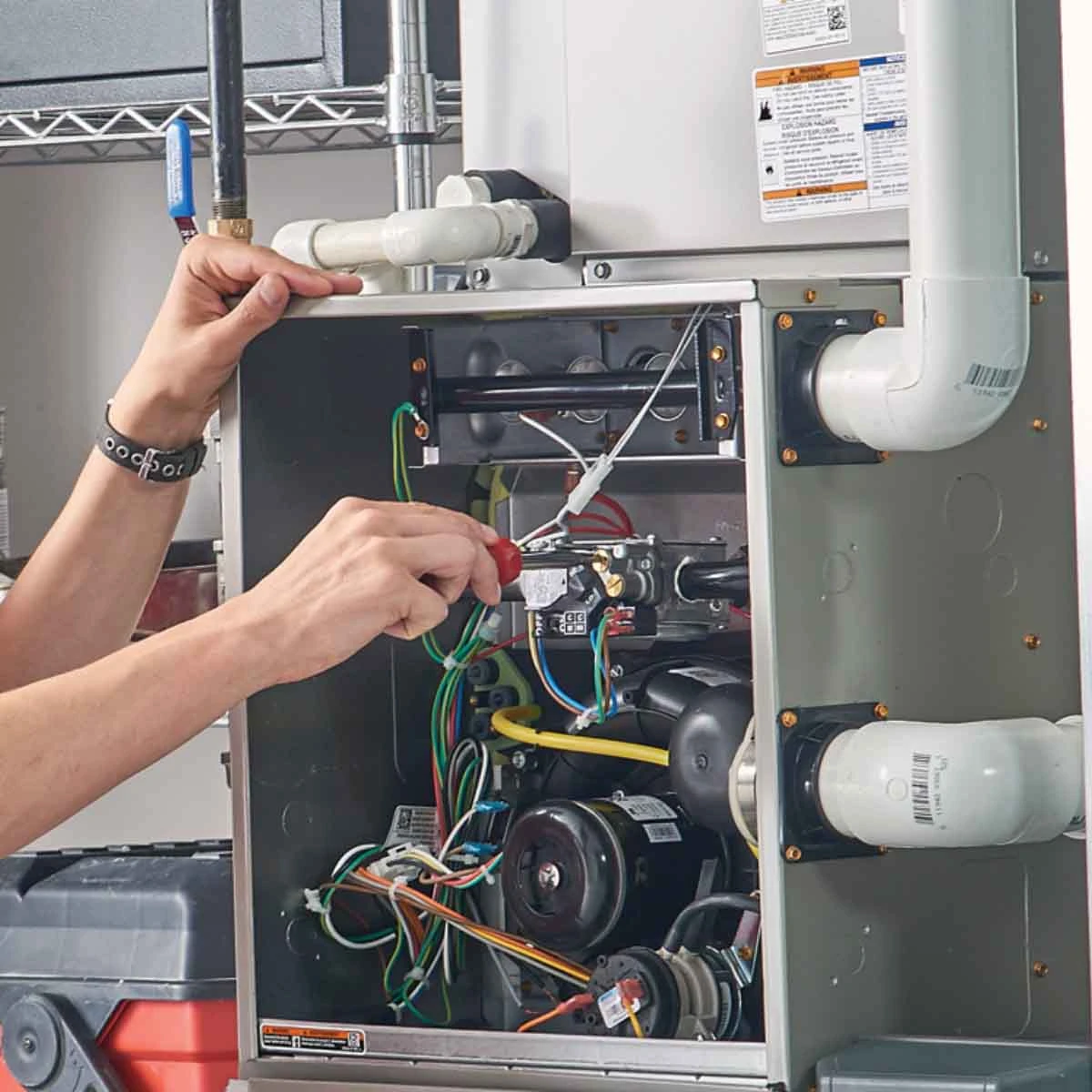
Sugar Land AC Pros provides residential heating maintenance in Sugar Land, Richmond, Missouri City, and Stafford. A fall tune-up should verify thermostat and operating sequence, inspect accessible electrical and airflow components, review furnace combustion and venting conditions or heat-pump defrost and auxiliary heat as applicable, and identify repair needs before colder weather calls for regular heating.
Why schedule heating maintenance before the first cold spell?
Heating systems in Southeast Texas may sit lightly used for months and then face a sudden run of cold mornings. A fall maintenance visit provides a controlled opportunity to start the system, observe how it responds, and find visible or measurable concerns before the household depends on it.
Maintenance is preventive, not a promise that equipment will never fail. It cannot reveal every concealed defect or guarantee a season without repairs. It can, however, document current operation, address routine upkeep within the agreed scope, and separate an ordinary maintenance item from a condition that needs diagnosis or corrective work.
This page owns planned fall tune-ups and safety and operational checks. If the heater is already failing, blowing cold air, tripping a breaker, or showing another active symptom, begin with heating repair. Furnace-specific fault diagnosis belongs on the furnace repair page.
What a heating tune-up can include
The exact checklist should match the installed equipment and the maintenance agreement. A gas furnace, electric furnace, heat pump, air handler, and dual-fuel system do not have identical components.
| Check area | Furnace-focused review | Heat-pump-focused review | Why it matters |
|---|---|---|---|
| Thermostat and controls | Verify heating call, setpoint response, sequence, and relevant safety/control behavior | Verify heating call, mode switching, auxiliary-heat command, and thermostat configuration | Incorrect settings, control faults, or wiring issues can imitate equipment failure |
| Filter and airflow | Review filter condition, return path, blower operation, and accessible supply concerns | Review filter condition, blower or air-handler operation, return path, and accessible supply concerns | Restricted airflow can affect comfort, temperature rise, equipment stress, and auxiliary-heat use |
| Electrical components | Inspect accessible wiring and connections and evaluate relevant operating components | Inspect accessible wiring and connections, outdoor and indoor electrical components, and heat-strip controls as applicable | Heat, looseness, wear, or abnormal operation may warrant correction |
| Furnace heat source | Observe ignition and burner sequence where applicable and inspect accessible burner-area conditions | Not applicable to an all-electric heat pump | Proper sequence and visible condition are part of safe furnace operation |
| Venting and combustion path | Inspect accessible venting, flue connection, and combustion-air conditions where applicable | Not applicable unless the system is dual fuel | Damage, disconnection, blockage concerns, or unsuitable conditions require attention |
| Heat-pump outdoor operation | Not applicable to a furnace-only heating call | Review outdoor-unit operation, coil condition, mode change, defrost-related components, and refrigerant symptoms within maintenance scope | Heat pumps depend on outdoor refrigeration operation during heating |
| Auxiliary heat | Not applicable unless part of a combined configuration | Check staged auxiliary or emergency heat operation as applicable | Backup heat should respond to controls without being mistaken for normal continuous operation |
| Condensate and drainage | Review drains or condensate components present in the system configuration | Review drains and indoor equipment where condensate management applies | Drain problems can cause water damage or equipment shutdowns |
| Operating results | Review temperature response, blower behavior, cycling, and unusual sound or odor | Review heating response, mode behavior, cycling, defrost indications, and unusual sound or odor | Results help distinguish normal operation from a repair need |
A tune-up does not automatically include repairs, replacement parts, duct cleaning, major duct sealing, refrigerant charging, electrical-panel work, gas-piping changes, or equipment replacement. If an issue is found, the next step and any added scope should be explained before work proceeds.
Fall heating-maintenance process
- Confirm the system and recent history. Identify whether the home uses a furnace, heat pump, air handler, or dual-fuel system. Discuss unusual smells, noises, cycling, thermostat behavior, prior repairs, and rooms that do not heat evenly.
- Review thermostat settings and startup. Call for heat under controlled conditions and observe the operating sequence appropriate to the equipment.
- Check airflow-related items. Review the filter, return-air path, blower operation, accessible duct connections, and obvious restrictions within the visit scope.
- Inspect system-specific components. For a furnace, this may include accessible ignition, burner, safety, venting, and combustion-path conditions. For a heat pump, it may include outdoor operation, reversing and defrost-related behavior, and auxiliary heat.
- Review electrical and mechanical operation. Inspect accessible connections and evaluate operating components included in the checklist without bypassing safety controls.
- Document results. Explain what was checked, what appears serviceable, what needs monitoring, and what requires repair or further diagnosis.
- Approve any added work separately. Maintenance findings should not become an open-ended repair authorization.
Testing may be limited by outdoor conditions, system design, accessibility, or a defect that makes continued operation inappropriate. The visit findings should state those limits rather than imply that an unperformed check passed.
Safety is part of the visit—not a guarantee
Gas-fired equipment deserves deliberate safety attention even in a region with a short heating season. Accessible venting, ignition sequence, burner-area condition, safety controls within scope, and signs of combustion or flue problems should not be treated as optional because the furnace runs fewer months.
Homeowners should also maintain carbon-monoxide alarms according to the alarm manufacturer’s instructions and applicable local requirements. An HVAC tune-up is not a substitute for working alarms, utility response, fire services, or a dedicated environmental test.
Stop and seek immediate help if you smell gas, suspect carbon-monoxide exposure, see smoke or fire, or observe sparking or another immediate electrical hazard. Leave the affected area and contact 911 or the appropriate utility emergency line. Do not wait for a routine maintenance appointment. Sugar Land AC Pros does not claim emergency availability on this page.
A homeowner checklist before the appointment
- Note the system type if known: gas furnace, electric furnace, heat pump, or dual fuel.
- Write down any thermostat alerts and when they appear.
- List rooms that heat unevenly or vents with noticeably weak airflow.
- Note new sounds, odors, long cycles, short cycles, or breaker trips.
- Locate the current filter size and record when it was last changed.
- Make the thermostat, indoor equipment, outdoor unit, attic or closet access, and electrical disconnect area reasonably accessible.
- Keep pets and stored items clear of the work path.
- Gather prior service notes when available.
- Do not remove panels, reach into equipment, relight components, or bypass a safety switch.
After the visit, retain the checklist or service summary. It can provide useful context if the system later needs repair and helps distinguish an old observation from a new symptom.
Local maintenance factors in Sugar Land
The local climate creates a particular maintenance pattern. Air conditioners run through prolonged heat and humidity, while heating equipment may remain idle until a sharp weather change. For shared systems, the furnace blower or heat-pump air handler may work heavily during cooling season even when the heat source has not run. Heating maintenance therefore needs to consider the full air-moving system, not just whether heat appears at a register.
Additional local factors include:
- Attic equipment and ducts. High attic heat, insulation movement, tight access, drain routing, and duct leakage can influence system condition and delivered airflow.
- Humidity and drainage. Heat pumps share cooling components, so condensate history and summer moisture performance can be relevant to year-round system care.
- Cold-snap transitions. Heat pumps should change modes, defrost, and stage auxiliary heat according to their controls; furnaces should start and cycle through their designed safety sequence.
- Long idle periods. Dust, storage around equipment, closed registers, filter neglect, thermostat changes, and unnoticed venting or electrical conditions may become apparent at startup.
- Mixed-age systems. Indoor equipment, outdoor units, thermostats, and ducts may have been installed at different times. Maintenance should identify compatibility concerns without assuming every mixed-age system requires replacement.
Heating maintenance is available for residential properties in Sugar Land, Richmond, Missouri City, and Stafford. Review all service areas or contact the team to confirm a specific property.
What affects a heating-maintenance estimate?
A maintenance estimate may vary with:
- equipment type and number of systems;
- furnace, heat-pump, air-handler, or dual-fuel configuration;
- indoor and outdoor equipment access;
- attic, closet, platform, or tight-clearance conditions;
- the defined checklist and whether testing beyond routine operation is requested;
- filter type and whether a replacement is included;
- current system condition and whether active diagnostic work is needed;
- controls, zoning, auxiliary heat, or multi-stage complexity; and
- repairs, cleaning beyond normal maintenance, or parts authorized after findings are explained.
No flat price is published here. Ask what the maintenance visit includes, what it excludes, whether filters or minor materials are part of the quoted scope, and how diagnostic or repair work would be authorized. No maintenance plan, discount, guarantee, response time, or priority scheduling benefit is represented unless it is provided in current written terms.
Maintenance, repair, or replacement?
| Situation | Best starting point |
|---|---|
| The system operates and you want a planned fall check | Schedule heating maintenance |
| The system will not start, underheats, trips a breaker, or has an active fault | Request heating repair |
| The problem is specific to furnace ignition, combustion sequence, cycling, or cold-air output | Review furnace repair |
| The heat pump has mode, defrost, auxiliary-heat, refrigeration, or replacement questions | Review heat pump service |
| You are selecting a new furnace or heat pump | Use the heating installation guide |
| You want the seasonal cooling counterpart | See AC maintenance |
Maintenance can uncover a need for repair, but it should not be used to avoid diagnosing an active failure. Likewise, a maintenance finding does not by itself prove replacement is necessary; ask for the condition, test result, risk, and available options.
Entity facts
| Fact | Detail |
|---|---|
| Business | Sugar Land AC Pros |
| Service | Residential heating maintenance and fall tune-ups |
| Equipment | Furnaces, heat pumps, air handlers, and residential combined-system configurations |
| Visit focus | Safety-related observations, operating sequence, controls, airflow, electrical condition, equipment-specific checks, and documented findings |
| Territory | Sugar Land, Richmond, Missouri City, and Stafford, Texas |
| Phone | (346) 683-3844 |
| service@sugarlandacpros.com | |
| Business model | Service-area business; no public walk-in address is represented |
| Scheduling | Contact the team for current appointment information |
Frequently asked questions
When should I schedule heating maintenance in Sugar Land?
Fall, before regular heating is needed, is a practical time because the system can be started and checked under controlled conditions. Maintenance can still be scheduled at another time, but an active no-heat or safety complaint should be described as a repair request rather than booked only as routine maintenance.
What does a furnace tune-up include?
Scope varies, but a furnace tune-up may include thermostat and operating-sequence checks, filter and airflow review, inspection of accessible electrical components, observation of ignition and burner operation, review of accessible venting and combustion-air conditions, relevant safety-control checks, and documentation of findings. Repairs and parts should be approved separately.
What maintenance does a heat pump need before winter?
A heat-pump visit may review thermostat modes, filter and airflow, indoor and outdoor operation, accessible electrical components, coil condition, mode change, defrost-related controls, auxiliary or emergency heat, drainage, cycling, and unusual sound or odor. Outdoor conditions and system design can limit which functions can be fully observed during one visit.
Does heating maintenance prevent every breakdown?
No. Maintenance can identify some wear, unsafe-looking conditions, control issues, airflow restrictions, and abnormal operation, but it cannot expose every hidden defect or guarantee future performance. Its value is a documented operational review and the opportunity to address findings before heavier use.
Do you provide heating maintenance outside Sugar Land?
Sugar Land AC Pros provides residential heating maintenance within Sugar Land, Richmond, Missouri City, and Stafford, Texas. Share the property city, system type, number of systems, and access details when requesting current scheduling information.
Schedule a fall heating tune-up
Tell Sugar Land AC Pros the property city, equipment type, number of systems, equipment locations, and any recent symptoms. Request an estimate or appointment, call (346) 683-3844, or email service@sugarlandacpros.com. The team will discuss the residential maintenance scope and current scheduling without promising emergency response, a repair-free season, or an unverified price.